Showing posts with label Paul Krugman. Show all posts

Monday, December 3, 2007

Innovating Our Way to Financial Crisis


Today's Paul Krugman column is a must-read. Here's a tease:

Credit — lending between market players — is to the financial markets what motor oil is to car engines. The ability to raise cash on short notice, which is what people mean when they talk about “liquidity,” is an essential lubricant for the markets, and for the economy as a whole.

But liquidity has been drying up. Some credit markets have effectively closed up shop. Interest rates in other markets — like the London market, in which banks lend to each other — have risen even as interest rates on U.S. government debt, which is still considered safe, have plunged.

“What we are witnessing,” says Bill Gross of the bond manager Pimco, “is essentially the breakdown of our modern-day banking system, a complex of leveraged lending so hard to understand that Federal Reserve Chairman Ben Bernanke required a face-to-face refresher course from hedge fund managers in mid-August.”

The freezing up of the financial markets will, if it goes on much longer, lead to a severe reduction in overall lending, causing business investment to go the way of home construction — and that will mean a recession, possibly a nasty one.

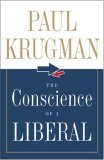
The Conscience of a Liberal


Paul Krugman is one of the few traditional media columnists that I read consistently. His new book, The Conscience of a Liberal, takes a look at the growing income inequality and why this has occured. From the review:

Starred Review. Economist and New York Times columnist Krugman's stimulating manifesto aims to galvanize today's progressives the way Barry Goldwater's The Conscience of a Conservative did right-wingers in 1964. Krugman's great theme is economic equality and the liberal politics that support it. America's post-war middle-class society was not the automatic product of a free-market economy, he writes, but was created... by the policies of the Roosevelt Administration. By strengthening labor unions and taxing the rich to fund redistributive programs like Social Security and Medicare, the New Deal consensus narrowed the income gap, lifted the working class out of poverty and made the economy boom. Things went awry, Krugman contends, with the Republican Party's takeover by movement conservatism, practicing a politics of deception [and] distraction to advance the interests of the wealthy. Conservative initiatives to cut taxes for the rich, dismantle social programs and demolish unions, he argues, have led to sharply rising inequality, with the incomes of the wealthiest soaring while those of most workers stagnate. Krugman's accessible, stylishly presented argument deftly combines economic data with social and political analysis; his account of the racial politics driving conservative successes is especially sharp. The result is a compelling historical defense of liberalism and a clarion call for Americans to retake control of their economic destiny.